Photo
Recipe
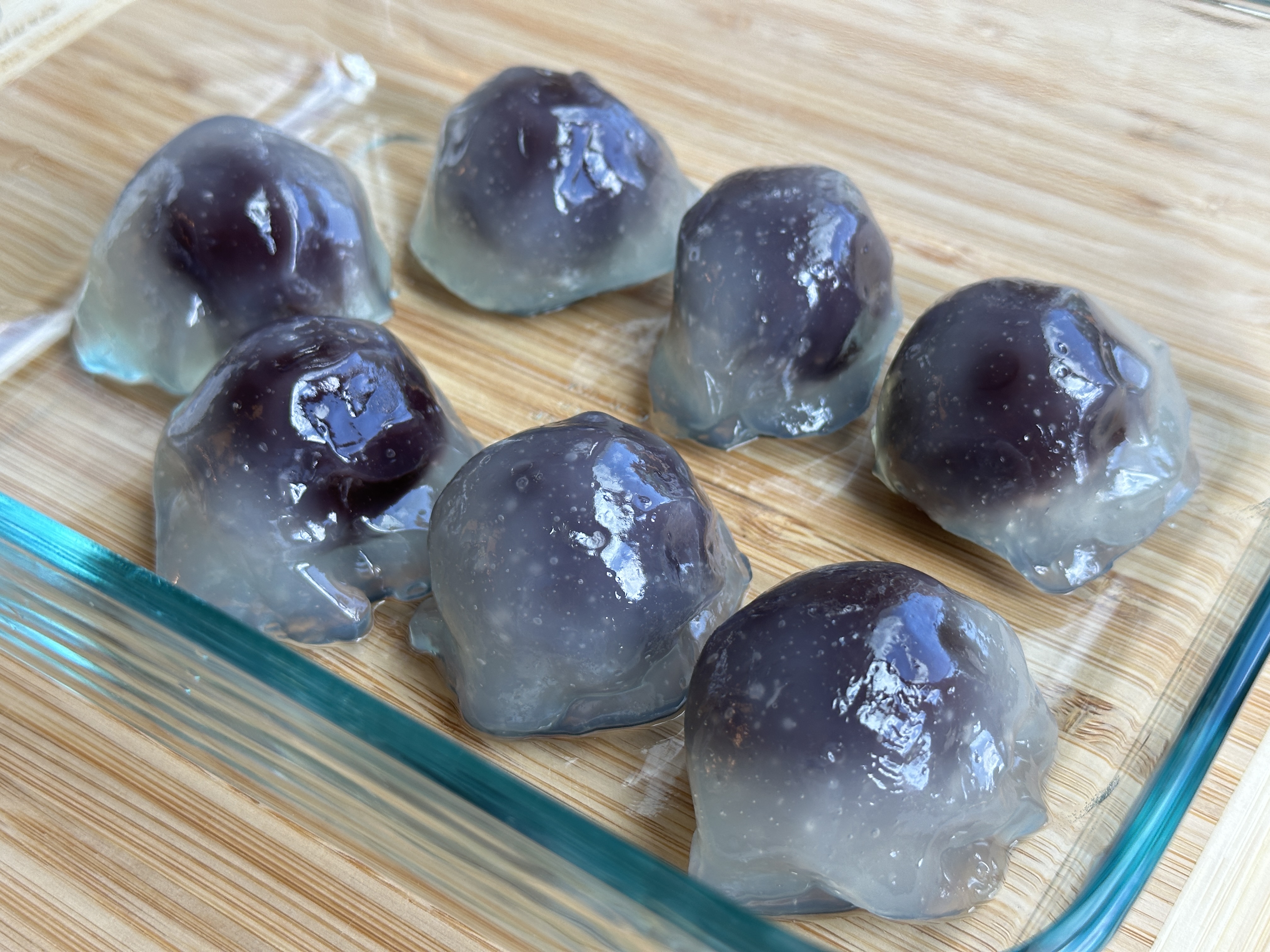
Very similar to Mizu-botan. I followed a slightly different recipe though, and slightly different heating techniques.
Makes 12 servings, could squeeze out one or two more but it gets tight. From the black wagashi book.
- 50g kuzu
- 125g sugar
- 250g water
- 20g anko balls
Prep:
- Roll out 20g anko balls, set aside.
- Line a steamer with parchment paper.
- You will place the manju directly into the steamer.
- Fill a large bowl with warm water.
- It should be big enough to comfortable put both hands in.
- Prepare two spatulas to work the kuzu. Having a second person for this part is great.
- You’re basically going to be making a quenelle with the kuzu.
Cooking the kuzu:
- Mix the kuzu, sugar, and water.
- Strain kuzu into the water like usual.
- Heat on medium (5-6) until the kuzu starts to gel, stirring constantly.
- Once 70% of the kuzu has started to gel, lower the heat to medium-low (3) and continue stirring until done.
- This is the hardest part. If you overcook it, it will be too stiff. Undercook it, and it will be hard to work with.
- Cook until it takes on some translucency. It should no longer be all white. This will take another ~3 minutes.
- Gather the kuzu together in the pan (so it’s a big blob), and remove from heat.
Forming:
- Using two spatulas (or one spatula and one take-bera), form about 20g of kuzu into a ball.
- Like mentioned above, this is a bit like making a quenelle.
- The goal is to create a taut surface which will nicely wrap around the anko.
- Don’t stir! See tip below.
- With very wet hands, form the kuzu around the anko.
- There are lots of ways to do this. For hand-forming, the way I found most successful was:
- Take the ball of kuzu from the spatula, then dunk it completely in water.
- This allows you to keep the kuzu in the pot piping hot, but then have something nice to work with.
- Take the anko in your right hand and place kuzu on top, holding the anko from below. Let the kuzu drape over the anko until covered.
- Place in left hand, pinch off the bottoms to seal.
- With right hand, pour water over your left palm, then place manju directly into steamer basket.
- I like to try to place the pinched-off side down. It looks less blobby that way.
- Pouring water over your hand helps loosen the manju without damaging its structural integrity.
- Take the ball of kuzu from the spatula, then dunk it completely in water.
- The book, instagram, etc have other ways. I’m still exploring which I like most.
- There are lots of ways to do this. For hand-forming, the way I found most successful was:
- Steam on high for
10m5m. (I spritzed with water after taking out, probably don’t need to do that though).- Some recipes recommend 5m, could do that.
- Over-steaming at this point may cause the manju to crack. I have done this before, especially in the small steamer. Hence the medium high, not high.
- Remove from steamer, and let manju come to room temperature before putting into container.
Tips:
- Once you have taken the kuzu off heat, try not to stir it anymore. Stirring at this point will introduce air bubbles (because the mixture is stiffening, and air mixed in will stay trapped in), which will make the final product look glassy.
- Work fast! As the kuzu cools, it begins to tear instead of stretch, which keeps you from getting a nice smooth surface on the manju.
- Two people for the forming, one to take from the pot and the other to form, works well.
- Less is more. It’s hard to do, but the thinner the kuzu, the glassier it looks.
- Once the manju is formed, you can do a little bit of smoothing if you wet your hand, but there’s not much that can be done at this point.
- MAJOR forming tip: Use more kuzu than you need.
- If you just use the amount you need to cover the ball, you will have to hand-pull the kuzu around the ball. There is zero way to use your fingers and not leave marks, so if you have to touch it with your fingers at all, you have already lost.
- The solution is to use a large amount of kuzu. The weight of it will cause it to drape nicely over the top. Then, the only trick is how to pinch it off and get it onto the sheet. I haven’t figured that part out yet.
- Another forming tip: use your palm, not your fingers.
- If you’re doing the draping method above, and it’s not quite draping enough, push from the top using your palm. Pushing with your fingers will leave marks. Palm does not.
Memo:
- Overcooking the kuzu doesn’t seem to be much of a problem for Mizu-botan, because forming with plastic wrap will help smooth things out anyway.
- Undercooking is impossible to salvage through steam. You must cook it correctly on the stove.